
 Following my last column, I received a number of enthusiastic responses for which I am grateful. Our June/July season is taking a pause until we return in late August with two more programs leading up to Labor Day. Since my comments on the details of rehearsing chamber music seemed to be of interest, I thought I would recount some memorable orchestral moments from my career, especially as the Peninsula Music Festival is set to take the stage.
Most of our Midsummer’s Music musicians play, or have played, a significant amount of orchestral music. For example, Ann Palen and Mara McClain work with Lyric Opera of Chicago, and Jeannie Yu and Heather Zinninger are members of the Milwaukee Symphony. David Perry performs from time to time as Concertmaster of the Chicago Philharmonic and was for many years with the renowned Orpheus Chamber Orchestra in New York. I was Principal Bassoon at Lyric Opera of Chicago for 48 years and held the same positions with the Grant Park Symphony Orchestra and the Chicago Philharmonic.
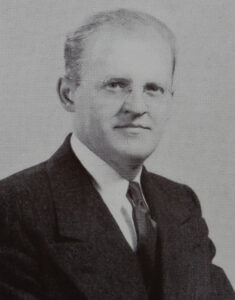 One of my earliest professional memories involves Thor Johnson, the musical founder and conductor of the Peninsula Music Festival. One of the reasons I chose Northwestern University for work on my master’s degree was because Thor Johnson was the conductor of the orchestra there. I had heard many good things about him and wanted to play under him. Unfortunately, when I arrived in Evanston in the fall of that year, I learned that he had just left to go the Interlochen Arts Academy. I was seriously disappointed. But even though Thor was gone, his reputation, especially in the form of “Thorisms,” remained. Students who had played under him spoke to one another in this mysterious tongue. One would pass another in the hall and say, “study the score, boy, study the score!” Apparently, Thor had a habit of saying things in triplicate. A fellow student would see me and, instead of saying “hello,” would utter, “better, better, better!” It was always said in a kind of pseudo reverential way. The most unkind was, “You just don’t care, you just don’t care!” This was said with a dour shaking of the head.
This was the Thor Johnson experience I was paying big money for at Northwestern, until, three years later I was invited to play with the Peninsula Music Festival. Hurray! Now I was going to work with this inspiring man and hear this cryptic language, that I was now well versed in, from the source. Several rehearsals went by and I didn’t hear one word said in triplicate. I didn’t hear “worship the score,” or “piano, piano, piano [soft]!” Then, as we were rehearsing the Beethoven First Symphony, he decided to spend some time on the third movement and said, “Scherzo, people, —scherzo, scherzo, scherzo.” I nearly fell out of my chair. It wasn’t a myth after all. Then more of those NU hall sayings came forth—“piano, piano, piano” for sure. But he could also be rather scathing if he thought you were not prepared or trying your best. The young principal flute player caught his ire. “You just don’t care, boy, you just don’t care. Study the score—study the score!” Yikes” I thought. And this was delivered with the most withering scowl and solemn shaking of the head back and forth.
I also remember how hot it was in the old gym where we performed in those days. No air conditioning and up on the stage under warm lights in August. And no one suffered more than Thor. His rehearsal attire was typically a Guayabera shirt, and you could tell how long it was until intermission by how far down the fabric his shirt was soaked through. After the brief rehearsal break, he would return to the podium wearing a fresh shirt and the process would begin again.
The schedule in those days was the same as it is now—INTENSE. I know of no other orchestra in the country that does three different programs in one week and has a 12-service week (rehearsals and performances). It can eat you alive, especially if you haven’t come prepared. But after it was all over, I was very happy that I had been a part of it and had gotten to work under a wonderful conductor. I was also glad to finally get to the source of a vocabulary that I had already adopted before I got to know the man. At NU, using those Thor aphorisms was a sign you were in a club and knew the passwords. Now I finally felt like a true member.
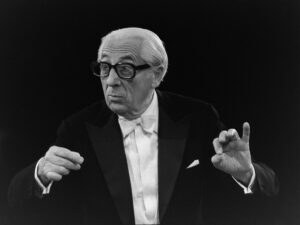 The next season, I was invited to join the Grant Park Symphony Orchestra, which plays in downtown Chicago. Its season ran the whole summer (currently 10 weeks) and overlapped the PMF, so I wasn’t able to return to Door County at that time. I also was now Principal Bassoon at Lyric Opera of Chicago, which takes us to my next story involving the esteemed German conductor, Ferdinand Leitner. In those days, Lyric was heavily invested in the Italian repertoire of Donizetti, Rossini, Verdi, and Puccini. When we did something from the German repertoire, Leitner was frequently called upon to lead the orchestra. He had a sterling career in Germany with Music Director positions in Stuttgart and Zurich and guest conducting appearances at the Amsterdam Concertgebouw and with the Berlin Philharmonic, among others. He made over 300 recordings including a legendary set of the Beethoven Piano Concertos with pianist Wilhelm Kempf and the Berlin Philharmonic.
Leitner was rather brusque and businesslike. He seemed particularly perturbed by even the most occasional mistake in rehearsal. He would immediately turn toward the offender, leaning over the front edge of the podium with a stern look that was withering. The French horns were a particular subject of his attention. In German music, the horns change transpositions quite frequently, so that what would be a “G” in one transposition is now a C in a new transposition. That might soon change to a B-flat, etc. It is easy to get confused, and sometimes in rehearsal, the horns would go off the rails—it only took one. Leitner would give his most intense scowl and then say in his German accent, “Vhat are you tooing!”
During my college student days, I had had some thoughts of pursuing conducting. I studied it, took a class in it and soon found myself the Assistant Conductor of the Nashville Youth Orchestra (during undergraduate school) and Assistant Conductor of the Northwestern University Orchestra as a graduate student. I got to spend some amount of time on the podium and enjoyed it. However, the realities of being a professional conductor also started to dawn on me. The frequent travel that made family life difficult was one thing. I also realized that having a strong background in piano would be very helpful in score study. My pianistic abilities were very limited. I bore down on my bassoon studies, and now I was in a major professional orchestra playing under some of the top conductors in the world. My recent interest in conducting continued as an observer. Opera conducting is one of the most demanding realms for a conductor with the many changes in tempo, the quick changes of emotion, the multiple forces to bring together (orchestra, singers, chorus, etc.). I had a catbird seat to observe the best.
As a young conductor, I had been very keen on great technique. I wanted a clear beat that everyone could follow precisely. I worked on many of the major difficulties—how to get in and out of held notes (fermatas), how to start the Beethoven 5th, and similar issues. I was not as interested at that time in the emotional content of the music as I was in technique, and I expected to see some very fine technique from the maestros in front of me. To my surprise, Ferdinand Leitner was a big disappointment—at least at first. His technique seemed quite rudimentary. It was very plain and workmanlike. Yet, over time, I began to notice something. He got the orchestra to have a sound very appropriate for the music we were playing. With more rehearsal time, everything we were doing started to sound exactly right. The love scenes were more touching, the bursts of anger more terrifying, and, for an orchestra steeped in Italian music, we actually started to play Wagner like we were born and bred in Germany. Not a small feat, and he did this with a rather pedestrian right arm that just seemed to give the tiniest hint of information. With time, I began to realize something that was crucial. The technique was not as important as the concept. Leitner brought a powerful concept of the work to the podium and just standing in front of an orchestra, he exuded it. It almost seemed to come from his pores. He WAS Wagner on the podium—or Mozart. I began to realize this man was so steeped in this tradition that all he had to do was transmit it telepathically. The slightest change in the look on his face told us so much. I also found myself very interested in what he had to say to any of the musicians during rehearsal. Even comments to the second violins that had little to do with me or my section I strained to hear.
He also had an extremely acute sense of pacing. When he conducted us in our first Meistersinger of Wagner, we had a potential Union issue. Our contract said that we normally had to take a break in rehearsal after an hour and a half. There was one exception, and that was for dress rehearsals of Strauss or Wagner in which case we could go up to two hours without a break. However, the last act of Die Meistersinger is long. Over the years, depending on the conductor, it could be 1:50 (Marek Janowski) or 2:15 (Christian Thielemann). As we approached the dress rehearsal of this first encounter with this giant work of nearly six hours total, our concertmaster, who was also the personnel manager, brought the two-hour limit to Leitner’s attention. As personnel manager, he didn’t want to find himself at the two-hour point, having to stand up and stop the rehearsal with only three minutes remaining in the act (these limits were very strictly adhered to). When he discussed this with Leitner, the maestro said, “Don’t worry, it will only be one hour and fifty-nine minutes!” The concertmaster set his stopwatch as we started the last act. When the last note was played, Leitner looked down from the podium and pointed to the stopwatch. “What does it say?” To his amazement, the concertmaster replied, “One hour, fifty-nine minutes, and thirty seconds.” When we came to the performances, there was no such limit, but the concertmaster decided to time the last act each night out of curiosity. All of them came in at one hour and fifty-nine minutes with a variation of no more than 30 seconds.
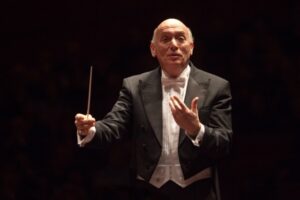 But the most unforgettable Leitner moment came in his first time with us, which was for Mozart’s Don Giovanni. After extensive rehearsals, we had a run of about eight performances over a few weeks, which was normal at that time. One of those performances took a unique and disturbing turn. We were well into the third act of this 3-hour 45-minute opera. Leitner was high up on the podium, which was several steps up from the floor of the pit so he could have a good view of the stage and singers. As he was conducting, he looked down toward a cellist right below and to the side of him and motioned toward an empty chair. The cellist picked up the chair and placed it on the podium whereupon Leitner sat down while continuing to conduct. A few moments passed and we were getting closer to the end when he motioned to Pinchas Steinberg, the concertmaster below and right in front of him. Leitner knew Pinchas was a conducting want-a-be because Pinchas had been showing orchestral scores to Leitner and getting tips on how to handle certain passages. Now, at Leitner’s insistence, Pinchas jumped up the steps onto the podium next to Leitner. By now, Leitner was looking quite pale. He handed the baton to Pinchas. Without missing a beat, Pinchas started conducting. We were in the finale of the opera where the four main singers deliver the moral of the story standing at the front of stage looking right at the audience. It is fast and exciting. As Pinchas conducted he noticed that Leitner was starting to slump in his chair. Pinchas shifted the baton to his left hand and held onto the shoulder of Leitner’s tails coat with his right hand to keep Maestro from falling out of his chair. That worked for a moment or two, but then Leitner slid from his coat out of his chair and rolled all the way down to the floor of the pit in front of the leader of the second violins unconscious. Pinchas was now conducting with his left hand and holding onto an empty tails coat with his right.
I couldn’t see Leitner at this point because he had fallen on the opposite side of the podium from my seat. All I could think was that I just saw this somewhat elderly man have a heart attack right in front of me, and, thinking he might be dead, I started to feel somewhat sick. We played the remaining two minutes or so of music, and I remember the stricken look on the faces of the singers who were looking directly at this as they tried their best to finish their last few notes with some kind of enthusiasm.
Almost no one in the audience was aware of what had just happened and, with the final chord, began enthusiastically applauding for a great performance. The orchestra was in shock and just sat there looking at one another. Within a minute or two several paramedics hurried into the pit. At this point you may be asking, “Why didn’t the performance come to a halt when this man fell to the pit floor dying? The show must go on, but aren’t there limits?” Well, as it turned out, we eventually learned that in the second row of the theater, seated almost directly behind Maestro Leitner, was a resident intern from Northwestern Hospital attending the performance. He could see what was taking place, and as soon as he saw Leitner disappear from his empty coat, he jumped up and climbed over the railing, down into the pit and crouched there by Leitner. One of the first things he did was search for a pulse. As it turned out, he found a strong and regular one, so he gave the okay sign to Pinchas, who was keeping the music going, to continue to the end. Eventually, the paramedics did further tests and determined that he had regained consciousness and that they could take him out of the pit. The entrance to the pit was not up to current code, and they couldn’t get their gurney into the pit, so they had to carry him out in a chair. As he passed by, he turned his head toward some of us and gave a feeble wave and bit of a smile. What a tremendous relief! In due time, we learned that Leitner had not had enough to eat that day, and his blood sugar got too low from all his exertion. He had fainted. Within a few days, he returned to conduct the remaining performances without incident.
As an aside, Pinchas Steinberg has gone on to an outstanding conducting career, especially in Europe where he has conducted all the major orchestras and served as Permanent Guest Conductor of the Vienna State Opera, Chief Conductor of the Orchestre de la Suisse Romande in Geneva, and Chief Conductor of the Budapest Philharmonic.
To be continued….
Next up: Zubin Mehta introduces me to Heldentenor Siegfried Jerusalem in the most artful way.