
 This is a continuation of my previous column about a few unusual experiences I had playing bassoon in the orchestra. At the end of the last episode, the great German opera conductor, Ferdinand Leitner, was being carried out of the pit after fainting and falling off the podium. Opera conducting is not always that dangerous, and I am happy to report that Maestro Leitner returned often over the years to conduct us, and that included a complete cycle of Richard Wagner’s Ring des Nibelungen, four separate operas that form a cycle and include 18 hours of music. When we did it with Leitner, we did one of the Ring operas per year for four years. At Bayreuth, the festival house that Wagner built in Germany specifically for his operas, and which continues to produce the Ring Cycle every year, the four operas are done all in one week.
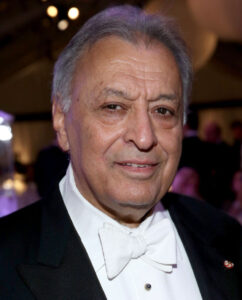 This is what we did at Lyric Opera in the 1990s when Zubin Mehta conducted our orchestra, but before doing three complete cycles in the weekly fashion, we first did them one per year building up to a kind of mini-Wagner festival in April of the final year. Playing a Wagner opera, especially one of the Ring works, is unlike anything else from a performance standpoint. It requires tremendous stamina, both physical and mental, outstanding technique on the instrument, and extraordinary control. A common misconception about Wagner’s music is that it is always loud. Of course it is, at times. It can be very powerful and require very forceful playing, but the majority of it, and really a large majority of it, is much more subdued and can even be chamber music-like for long periods. Wagner has a way of making those big moments really big by taking you across large expanses of quiet, even meditative sections. I liken it to driving across Nebraska heading west. Rather flat and seemingly uneventful terrain until you get into Colorado and get the first glimpse of the Rockies way in the distance. Little by little, the mountains get more and more awesome until, bam, there they are in all their glory.
The thing is, in opera those big Rocky Mountain moments can be really draining, but so can Nebraska. Sometimes, those long soft sections take more control and more concentration than other parts, and if you’re going to lose one or the other, you don’t want it to be in the softest section! The reason many people think Wagner is mostly loud is because they have only encountered this music in a symphony concert where selections are performed. Of course, the selections include most of the big moments, so it seems like that’s what Wagner is all about. It’s only when you hear the entire work in an opera house that you get the total effect.
When we heard that we would be doing the Ring with Zubin Mehta, we were quite excited. We had all seen him on television conducting the New York Philharmonic or the Los Angeles Philharmonic, both places where he had been music director. We also knew he was Music Director for Life with the Israel Philharmonic, but there were also rumors floating about that his relationship with the NY Phil was not so wonderful. We wondered what it would be like working with him. However, right from the beginning, his rapport with us was wonderful. He seemed to revel in his work with our orchestra. That’s not so surprising because the Lyric Orchestra has always tried its best to give the conductors what they want. That’s not always the case with some orchestras and perhaps so in New York at that time.
Our first season went smoothly enough with Maestro Mehta. [As an aside, I should say that in opera houses, the conductor is referred to as “Maestro,” Italian for “Master.” It’s a very longstanding tradition that goes back hundreds of years when the head musician at court or in a cathedral setting was called “Maestro di cappella,” (Music) Master of the Chapel where much of the music was performed. Over the years it became shortened to “Maestro.”] We started with Das Rheingold (The Rhine Gold), the first of the four Ring operas. It is by far the shortest of the four Ring operas, lasting only 2 hours and 40 minutes. However, the 2 hours and 40 minutes are continuous. There is no intermission. There are four scenes, but they are connected and without pause. Just for context, remember that most symphony concerts are under two hours, and there is an intermission.
That requires some considerations ahead of time. A bottle of water might be helpful for hydration. On the other hand, a restroom visit right before starting would also be worth remembering. There is a famous story about Daniel Barenboim who was conducting this work early in his career. Apparently, he didn’t pay attention to what most seasoned musicians are very aware of. However, soon enough, he realized he was in trouble. According to the story I heard, soon after he began the work, he began to realize there was something he neglected to do. What was supposed to be the shortest of the Ring operas turned out to seem like the longest—and the most painful. You only make that mistake once.
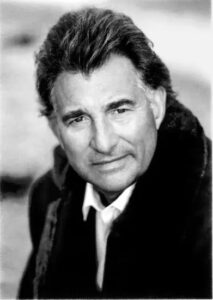 The second year of our Ring adventure, Mehta was back for Die Walküre, the next of the Ring operas. This one is in three acts and totals about four-and-a-half hours. Here for the first time in the Ring Cycle, we needed a Heldentenor (Hero Tenor) for the role of Siegmund. It is customary for the same singer to return in the next two operas, Siegfried and Götterdämmerung, but this time the role is that of Siegfried (son of Siegmund). All three of these operas require that unique Heldentenor voice for these roles. The singer must have incredible stamina because of the length and high tessitura, and he must also have a strong, clarion voice to be heard, at times, above the full Wagnerian orchestra of about 90 musicians. This Heldentenor type of voice is so called because the character is typically supposed to be that of a hero, and also because it is a heroic feat to sing these roles. At any one time, there are only a very few such singers available in the world capable of these assignments. For our production we had one of the very best, and one who was suitably named—Siegfried Jerusalem! Even though he was German-born, he was a distant descendant of a Crusader, thus the rather non-German sounding surname to go with his distinctively Wagnerian given name. Everyone in the orchestra knew this was a big star, and we were looking forward to his first appearance with us.
As is typical, we started Die Walküre with quite a few rehearsals of the orchestra alone. Finally, it was time to add the singers. With difficult or complicated works, the first combined rehearsal(s) are usually what is called a Sitzprobe—a seated rehearsal. It is purely a musical rehearsal without action. The principal singers sit in chairs at the front of the stage facing the orchestra and conductor below in the pit. When it is time for one or more to sing, they normally stand, and either sing from memory or have their music on a music stand for occasional reference. Staging rehearsals occur later after the musical matters are worked out in the Sitzprobe.
As we worked our way through the first act, we heard moments of Jerusalem’s voice come floating out from the stage above us, but then we came to a unique moment in the whole Ring Cycle—an aria! What makes this unique has to do with the revolutionary approach Wagner had developed toward opera. He even wrote extensively about it in a book entitled Oper und Drama (Opera and Drama). In it he made clear that the conventional practice of dividing operas into arias, ensembles, and recitatives was detrimental to the progress of the drama. Arias were also frequently written for vocal display and might have little to do with the story. They could easily turn into a litany of vocal gymnastics with only an excuse of a skeletal story. By the time Wagner wrote the Ring, he had fairly thoroughly incorporated his revolutionary approach of continuity – except—here in Die Walküre, at this one moment, he had written an aria. This set piece brings the progress of the drama to a halt while Siegmund sings rhapsodically about the end of winter storms (Winterstürme) and the coming of spring.
Now we were getting to hear Siegfried Jerusalem in one of his most delicious moments. As Maestro Mehta conducted, he seemed, for some reason, to be looking at me. I should digress for a moment and say that in all of my years playing in an orchestra, I made a habit of looking at the conductor as much as I could. I would glance at the music and then at the conductor until my memory told me I needed another look at the music. Unless the music was very complicated, I often could spend at least half of the time looking directly at the conductor. I did this, in part, because I wanted to see clearly how they were handling the orchestra. It was my old interest in conducting that was still there in the background. I also wanted to see their facial expressions. However, I soon discovered that it had an interesting effect. The conductors noticed I was looking at them. Now that may sound strange, but oddly enough, a large portion of the musicians don’t look very often directly at the conductor, and some almost never. Some players seem to almost studiously avoid looking. Certainly, of course, they can see the conductor’s motions with their peripheral vision, but when the conductor looked out across the orchestra, he only saw a few sets of eyeballs, and that included mine. I don’t think it will come as a big surprise to you that, in general, conductors like to be paid attention to. Anyone who thinks that they belong up on a pedestal in front of 90 highly trained and talented musicians and before an audience of thousands is pretty comfortable being the center of attention.
I also found that my observing the conductor’s approach and technique made things more interesting and the time went by more quickly. But I also found out that if the conductors wanted to see a pair of eyes, they quickly realized who in the orchestra they could make contact with. Consequently, I sometimes would get a knowing glance when something went a little differently or a minor crisis was averted. They liked to know that they weren’t the only ones aware of the situation.
So it was that Jerusalem was singing his big aria and Mehta was looking at me. Then the most unusual thing happened. He spoke to me! The whole orchestra (including me) was playing and Jerusalem was singing his heart out and Mehta started speaking to me while he continued to conduct. In case you’re wondering, this is NOT normal—definitely not! He said, in a very conversational and kind of off-handed way, “You know, he is a bassoon player.” Well, I was kind of busy playing my part, so I couldn’t really make an adequate response. But Mehta kind of seemed like he expected a reaction because he then said, “I’m serious. He plays the bassoon!” Blowing into the reed in my mouth and with my hands both holding and playing the bassoon, I was totally incapable of a suitable response, but he clearly seemed to expect it. I wanted to say, “I got it Chief! That sounds fascinating. I’d like to hear more.” But all I could do was wiggle my eyebrows up and down like Groucho Marx (the only part of my body I could move without disturbing my playing) as emphatically as possible. Have you ever tried communicating exclusively with your eyebrows? It’s a bit hard to get your point across.
Within a few minutes it was time for a break, so as the rest of the orchestra filed out of the pit. I went up to Maestro Mehta still on the podium and said, “So what is the story with Jerusalem and the bassoon?” “Oh, he played professionally in Germany,” Mehta said. “He was in the orchestra in Stuttgart for years before he became a professional singer. You should talk to him!”
I left the pit kind of dumbstruck. This was quite a revelation to find out that this big opera star had been a professional bassoon player. Of course, I was curious. But I also was puzzling over Mehta’s insistence that I talk to him. Would I just stop by his dressing room sometime and introduce myself as the Principal Bassoonist in the orchestra and say hello? I talked to my bassoonist colleagues back in the dressing room and, later on, I talked to Jean about it. She had witnessed the whole thing in rehearsal and thought it quite funny to hear this one-way discussion going on while we were all playing.
Then, that evening it dawned on me. Here was a golden opportunity. In addition to my performance activities, I also did some part-time teaching. I was a Professor at Northern Illinois University teaching about six or eight undergraduate and graduate bassoon students. I made the trip to DeKalb, IL, once a week to see my students. Over the years, I had become increasingly convinced that much of what we do to play the bassoon properly is similar to how one sings. As a student myself, I had earned money throughout college and graduate school as a paid section leader in church choirs. I had some voice training in school and also sang in the college choir. I had developed a pretty good idea of what even the best singers do to create their sounds, how they support the pitch, and produce vibrato, etc. I also had become increasingly convinced that my singing background was very helpful in the way I played the bassoon. I was using this more and more in my teaching. Now I had someone to help me confirm whether my ideas were truly valid or not. I hoped that he would agree to speak with me. Who would know better, especially both a professional-level singer and bassoonist who had spent years doing both, if I was on the right track.
Within a few days, I stopped by his dressing room and met him. He turned out to be very friendly and warm in greeting me. He seemed quite interested in my desire to interview him on this subject. He said I could come to his apartment (supplied by Lyric Opera for his stay with us) in downtown Chicago at some point, but added that it should be after the rehearsals had concluded. Once we got into the performance period, he would have some days off in between performances and felt like that would be a good time. We made a date, and I went off to buy a hand-held tape recorder! Thank you, Zubin Mehta!
My experience interviewing him turned out to be way beyond my expectation and is a story of its own worth recounting, but that will have to wait for another time. Please stay tuned if you are interested. In the meantime, get your tickets for our end of August and Labor Day concerts now. Check out the Labor Day Gala for sure. Cesar Franck’s great Piano Quintet will be on that program. It is a blockbuster, and there will be great food and beverages and other fun ways to celebrate at Björklunden. Now, as Wagner might say, Bis später (until later).