
Backstories, Front and Center
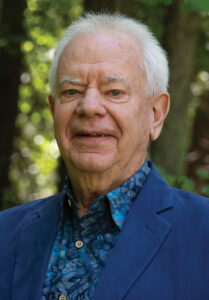 I promised the final of installment of my mini-series on playing in the orchestra, but it will have to wait just a bit. We have concerts already under way this week leading to Labor Day, and I want to provide some interesting backstories on the great works that are upon us.
We are doing two separate programs between now and Monday (Labor Day), September 1. The first program features the Franck Piano Quintet, which is generally regarded as one of the greatest chamber music pieces in the literature. It is a masterpiece of drama and passion, and its emotional content is so three dimensional. And, with Jeannie Yu at the piano and with the strings led by David Perry, you will not hear it performed any better anywhere.
However, there is such a delicious backstory to this work. In fact, it inspired a wonderful historical novel by Ron Harwood entitled César and Augusta. Here is a novel in which one famous piece of music is the central subject around which everything revolves. César is not the Roman emperor, but the French composer, César Franck (1822-1890). This César is a very devoted family man—married with one son. He is an organist and composer and is on the faculty of the prestigious Paris Conservatory. He is professional, punctual, and predictable to the nth degree.
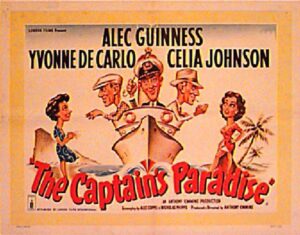 He comes home for lunch every day and is home for supper with his family as well. In the book anyway, his life is nothing if not routine. If you have seen The Captain’s Paradise, he is Alec Guinness on the Gibraltar side of his route back and forth to Morocco. (If you haven’t seen the movie, do—it’s great fun.)
Then, one day, a new graduate student comes into his studio. You guessed it—Augusta. She is talented, attractive, and alluring. She awakens feelings in César he didn’t know he was capable of. He is shy and hides behind his professional demeanor, unlike his colleague at the Conservatory, Camille Saint-Saëns, who is a very outgoing dandy. Saint-Saëns is naturally flirtatious and chats up Augusta at every opportunity. César finds himself inexplicably jealous, and realizes he is no match for his gregarious nemesis. Instead, he pours his feelings into a piece of chamber music for piano and string quartet. He finds himself writing with a depth of emotion and passion that has previously not even occurred to him. The things he cannot, or should not, say to Augusta are appearing on every page, in every phrase.
When it comes time to unveil this work, César arranges to have it performed at the Conservatory on a regular program of chamber music. Since Saint-Saëns is a remarkable pianist, Franck enlists him to perform the premiere. Saint-Saëns, who is extremely proficient at sight reading gives the work little advanced attention. Instead, he only really begins to discern the true nature of the work as it unfolds during the performance. Halfway through, he realizes he is playing his competitors love letter to Augusta who is in the audience. His hands, traversing the keyboard, are pouring out his competitor’s feelings in the form of this musical billet-doux. Saint-Saëns is incensed. He finishes the piece, slams down the key lid on the piano, and rushes from the stage, leaving his fellow musicians to acknowledge the deafening applause without him.
I hope I haven’t spoiled the story for you. There is so much more to the book. I highly recommend it. Ron Harwood is an Oscar winning screen writer, play-write, and novelist.
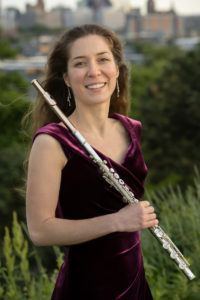 Sharing the program is a mesmerizing work by the 19th century American composer, Amy Beach. Her Theme and Variations in A minor, Opus 80, is based on her own song, An Indian Lullaby. The flute and the strings each interpret the melody differently in this haunting and thoughtful work that features our flutist, Heather Zinninger, and our string quartet. As we head into this year celebrating our country’s 250th anniversary (our Semiquincentenial, if you prefer), this is the first of several historical American compositions that we will be spotlighting. Both works on this program will be featured on our very special Labor Day Gala at Björklunden that will include introductory hors d’oeuvres, concert, and dinner after, and much more, but you can also hear it on Aug. 27th at Shepherd of the Bay Lutheran Church in Ellison Bay.
The other program we feature during this period runs August 28–31. It is titled “The Majesty of Schubert’s Octet.” The backstory here is how much this work has to do with Beethoven. Although Schubert was clearly a romantic composer, it is important to remember his close proximity to Beethoven, the colossus who stood astride the end of the classical period and the beginning of the romantic. Stylistically, they seem far apart. In fact, though, they were contemporaries. They both lived in Vienna at the same time. Although Schubert was 20 years younger, he died only one year after Beethoven. Yet, they seem to have met only when Beethoven was on his deathbed.
However, the influence was definitely there. Schubert was asked to write the Octet by Count von Troyer, an amateur clarinetist, who was employed by Archduke Rudolf (for whom Beethoven wrote the Archduke Trio). It was premiered in the Archduke’s home. Troyer specifically asked Schubert for a work in the mold of Beethoven’s Septet, Opus 20. As a young man making his way in Vienna after moving there from Bonn, Beethoven had been somewhat reluctant to write his first symphony. Here in the heart of their domain, he was quite intimidated by the eminence of Haydn and the shadow of the recently deceased Mozart. He decided to write a prototype. He would write a larger chamber music piece with the basic elements of a symphony (winds and strings) and test the waters without going in hook, line, and sinker. It was a huge success. He had developed wings. This Opus 20 was followed by Symphony No. 1, Opus 21. The problem was that the Septet’s fame continued throughout his career. It overshadowed works Beethoven thought more significant and mature. In his later years he even confessed, out of exasperation, that he wished he had never written it!
But, its success was not lost on Schubert, especially when Count von Troyer approached him with the request for a similar work. Many other composers were inspired by Beethoven’s success including Kreutzer, Blanc, Spohr, Berwald (which we recorded on the Centaur Label), etc. However, Schubert would even go so far as to use it as a protype for a symphony. Now, it is true, Schubert had already written several symphonies, but they were more modest works, many in the mold of Mozart. Beethoven had written much longer and more massive works like the Eroica, and the Seventh and Ninth Symphonies. Schubert welcomed the opportunity to create a protype, not for his first symphony like Beethoven, but for his last, The Great C Major. His Great C Major would be close to one hour long. So is his prototype. However, instead of the four-movement form of the Symphony, he opted for the six-movement divertimento configuration that Beethoven used for his Septet. Unfortunately, unlike the positive and immediate response that Beethoven’s work got, Schubert’s Octet languished for three years until it had its first public performance. Additionally, he was unable to find a publisher for it before his death. It had to wait until 1853 for the first three movements to be published and even longer for the complete work to be made public. Similarly, The Great C Major Symphony was not published until 1849. Schubert never heard it performed. It was discovered among his things by Robert Schumann who alerted Felix Mendelssohn to its existence. Mendelssohn premiered it in 1839 with his Leipzig Gewandhaus Orchestra, eight years after Schubert’s death. As a footnote, it should be noted that both Count von Troyer and Schubert served as pallbearers at Beethoven’s funeral.
 Pairing this work with another piece on a program is a bit tricky. The Schubert is a very big half of a concert, so the first half must be a bit more modest in length. It also shouldn’t be too serious, or you end up with too heavy a meal. We have the perfect work for our upcoming concerts. It is a piece called Impressions, and it is by a very celebrated current composer who happens, like Schubert, to be from Austria. However, Gernot Wolfgang has made a big name for himself in the U.S., particularly in Hollywood where he is recognized for his work in scoring for films. At the same time, he has been commissioned at least 50 times to produce concert pieces including the one we have chosen for this program. He also happens to be the husband of our wonderful bassoonist, Judith Farmer. The work is in three movements, each an “impression” of an imaginary painting, and it uses the same instrumentation as the Beethoven Septet. “Carnival in Venice,” “Dream,” and Country Road” all take us through vivid territory in a most eventful and entertaining manner.
Here are the remaining concerts:
THE MAJESTY OF SCHUBERT’S OCTET
Thursday, August 28, 7:00 pm, Björklunden, Baileys Harbor
Friday, August 29, 7:00 pm, MUSE, Sturgeon Bay
Saturday, August 30, 3:00 pm, The Clearing Folk School – Schoolhouse
Sunday, August 31, 4:00 pm, Kress Pavilion
CÉSAR FRANCK PIANO QUINTET
Wednesday, August 27, 7:00 pm, Shepherd of the Bay Lutheran Church, Ellison Bay
Monday, September 1, 3:00 pm, LABOR DAY GALA, Björklunden, Baileys Harbor
Call (920) 854-7088 or visit www.midsummersmusic.com for tickets or more information. This is the sprint to the finish with great music. Don’t miss a note, especially on Labor Day!