
 If finding a mystery behind a masterpiece of music intrigues you, read on, because I have three for you, and they are all on our next program entitled “Dvořák, Bruch, and Beethoven 7.” Certainly, it’s no mystery we are talking about these three composers, so let’s start with the first, Antonín Dvořák. We will be doing his famous Notturno, Opus 40. It is quite well known as a work for string orchestra and is often heard on symphony concerts. It is sublimely serene and so heartfelt. Above the evolving tender melody, there is a lonely bass note, or actually two but the same note in octaves that sounds like a kind of intermittent but regular heartbeat. That’s all the bass plays for the first half of the work, but it’s poignant.
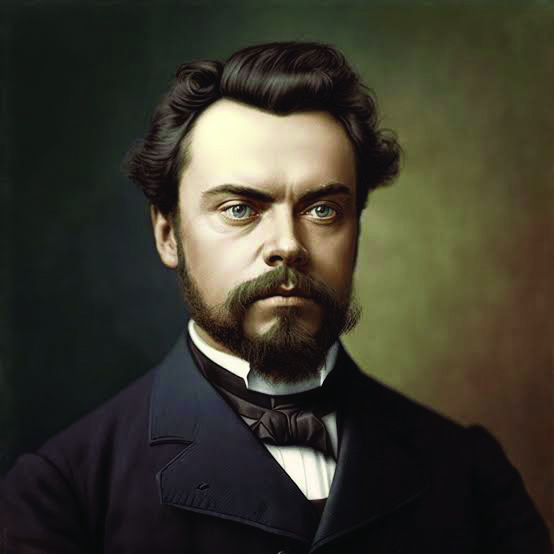 It is no mystery as a string orchestra work, but what is it doing being played by five musicians as a chamber music work? The best answer might be that it started out that way, but like all good mysteries, there are a few turns and twists along the way. You see, the orchestral version was published in 1883, but the work had its origins as far back as 1870 when Dvořák wrote it as the slow movement to his Fourth String Quartet. Clear enough, so far, right? But that quartet went unpublished during Dvořák’s lifetime. However, in 1875, he liked this slow movement so much that he decided to use it in his String Quintet No. 2 in G Major. However, he also wrote another slow movement for the same work, and he and his publisher decided that it was better with only one slow movement. Our beautiful Nocturne went back on the closet shelf. Finally, it appeared as the now famous work for string orchestra in 1883, and Dvořák conducted the premiere in London. It was such a hit that Dvořák also made versions for violin and piano, and piano four-hands in order to make more money from its popularity. For our performances, we are going back to near the beginning of this saga—not the original quartet version, but the discarded and reworked movement from the Quintet, which was originally called Intermezzo.
Another little footnote to this whole story is that just a bit prior to writing this work, Dvořák played viola in an orchestra in Prague. One of the concerts he performed in was conducted by the great German opera composer, Richard Wagner. Wagner’s music had a profound effect on the young would-be composer at this time. Much of that eventually wore off, but you can still hear a taste of it in this relatively early string work, especially in some of the imaginative harmonies and in the melodic turn that recurs throughout, a figure that was a signature Wagner motif, especially where love was involved.
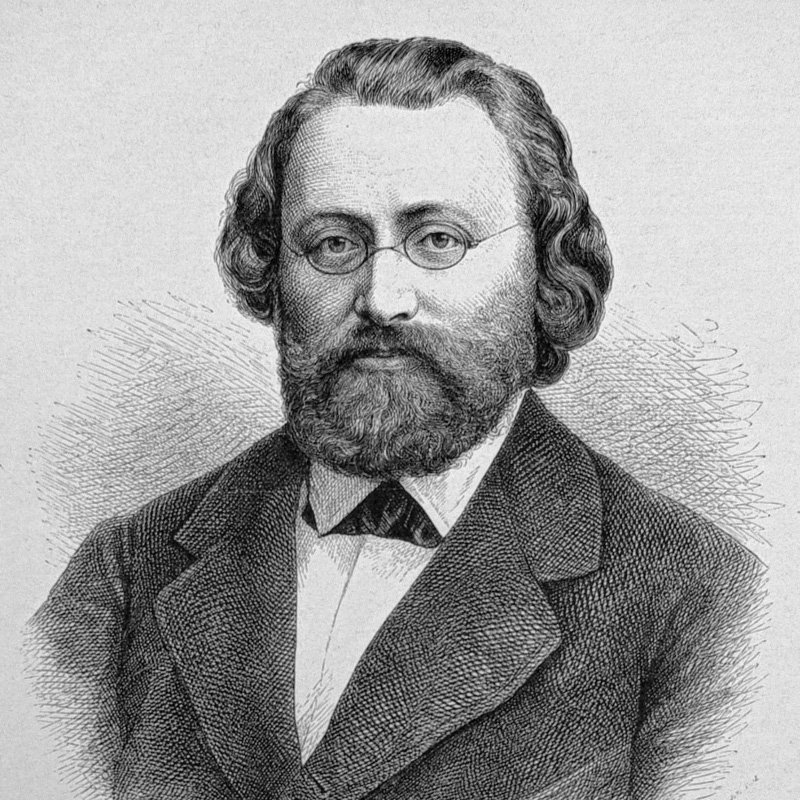 In the case of Max Bruch, the mystery is not so much about the nature of the work as it is about the very existence of the work itself. Here is a composer, born in 1838, five years after Brahms, who wrote famous works like The Scottish Fantasy for Violin and Orchestra, the First Concerto for Violin and Orchestra, and his Kol Nidrei for Cello and Orchestra. Yet in the A Minor String Quintet, we are dealing with a work that only came to light in 1991, some 70 years after its composition. It appears that it was only first performed in 2008.
Here we have a serious work by a first-rate composer that remained hidden for the better part of a century. How can that be, especially in modern times? Well, first of all, Max Bruch wrote the work shortly before he died in 1920 at age 80. He was grieving over the loss of his wife, and his style was considered archaic in the world of Schoenberg and Stravinsky. After his death, his very late works fell into oblivion. It didn’t help that Bruch was thought, by the Nazis, to be Jewish (which he wasn’t) because he wrote several works, like Kol Nidrei, with Jewish themes. Although his conservative style might have appealed to the Nazis, his works didn’t stand a chance because of the possibility of being the product of a Jew. Midsummer’s Music is helping to bring many of these forgotten works to light with performances last season of his String Quintet in E-flat (1918) and with his other Quintet and his String Octet this season. All are from the two years before his death and were only published recently. It is rare that we get to hear a unique performance of a work by a major composer that was written over 100 years ago. Door County is one of the few places where one can experience this.
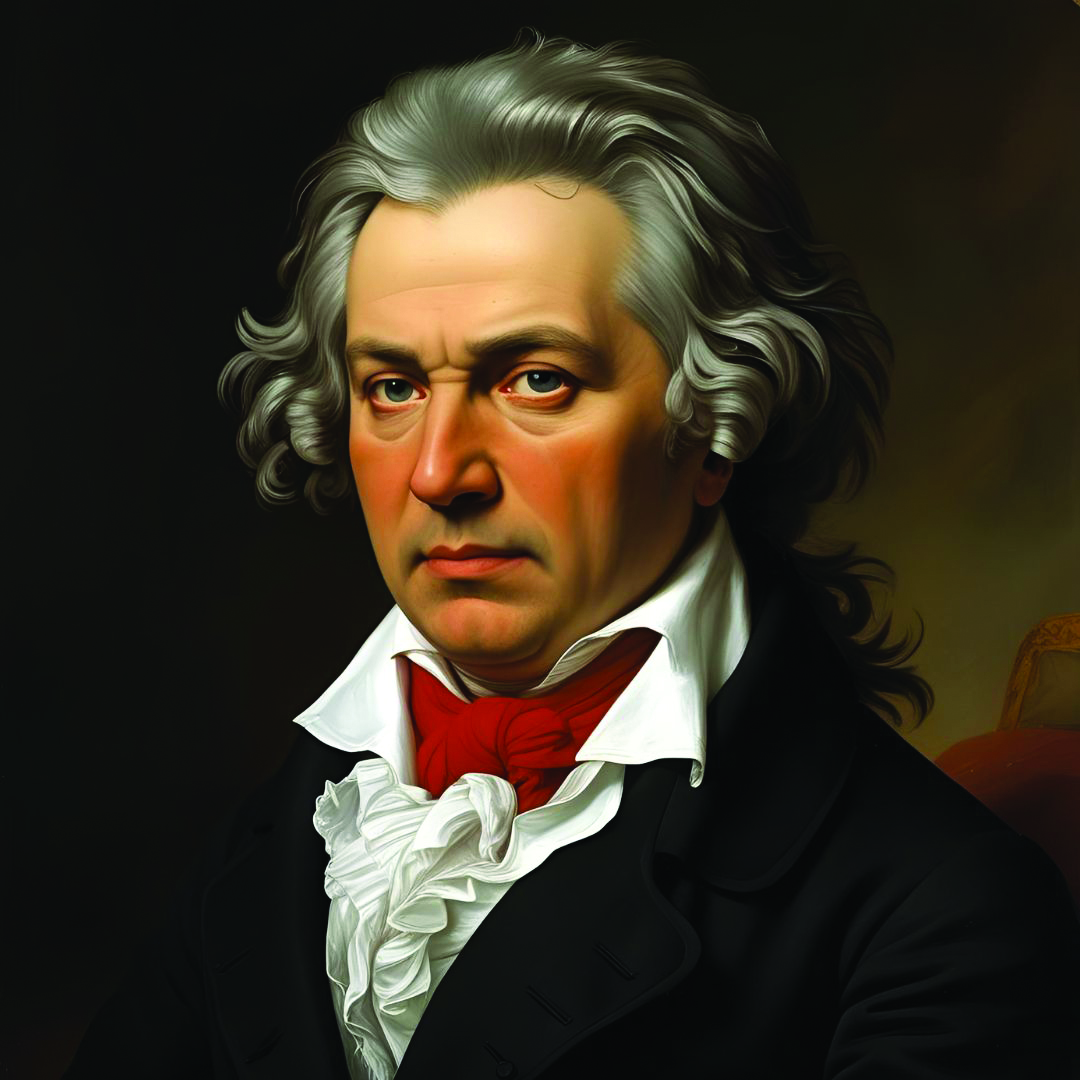 In the case of the final work on our program, the Beethoven Seventh Symphony, the mystery, like the Dvořák, involves the existence of this famous symphony as a piece of chamber music. The clue lies in money—publishing money. To understand, we have to transport ourselves back to Ludwig van Beethoven’s time. We are at the premiere of the Seventh Symphony in Vienna. It is December 1813. After years of being under the control of Napoleon and his army, Vienna is celebrating the retreat of Napoleon’s army, its impending defeat, and the people are relishing Beethoven’s music in a charity event to help wounded soldiers. The point is this is a special concert. Celebratory, but also intended as a public fundraiser. It also was not being performed by an established orchestra. The only few established orchestras at that time were those of the nobility, and they were small, they were dwindling in number, and almost nobody heard them except friends of the nobility. Beethoven didn’t write for these groups. He wrote for the general public, but he had to create a pick-up orchestra every time he wrote a new orchestral work. There was no Vienna Philharmonic at the time. It wasn’t officially established until 1842. As Wikipedia says, “Until the 1830s, orchestral performance in Vienna was done by ad hoc orchestras.”
Why is this important for our discussion? Because, after a first performance or two, who was going to purchase the newly published score and parts of Beethoven’s latest symphony? The Berlin Philharmonic was formed in 1862, the London Symphony in 1904. They weren’t going to buy it! Any publisher kind enough to put a Beethoven Symphony into print didn’t have much hope of recouping the cost from sales. Why would they do it? In hopes of getting the rights to more lucrative works from such a famous composer for one thing. If they could put out some of Beethoven’s piano works, or some of his chamber music – works that had the chance of considerable sales – they might publish a symphony to curry favor with Beethoven for that right. However, there were other possibilities for income, and those lay in arrangements for smaller combinations of the symphony. Versions that could be enjoyed by the individual or small groups. Consequently, soon after a symphony appeared in print, a piano reduction also appeared. In many cases, chamber music versions also appeared. Beethoven himself arranged his Second Symphony as a trio for violin, cello, and piano. With other works, he frequently authorized someone else to make such versions. In 1813, the Viennese publisher Anton Steiner, the publisher of the Seventh Symphony, had a group of composers/arrangers working for him who were capable of such arrangements. It appears that Beethoven approved of this process. It was clearly in his interest to do so because it meant more income for him from sales.
Another way to think about this is from the standpoint of the average listener. Throughout the 19th century, most people (by far) who heard a Beethoven symphony, would hear it in a version other than the orchestral one. They would hear it as a transcribed piano work or as an arrangement for chamber ensemble. The greatest examples of this process are the transcriptions of the Beethoven Symphonies by the extraordinary pianist, Franz Liszt. He began making these piano transcriptions in 1837 (10 years after Beethoven’s death) and completed them in 1865 when they were published by Breitkopf & Härtel.
With our upcoming concerts, we will be taking you back to the early 19th century and presenting you with the opportunity to hear Beethoven’s Seventh as it was more likely to be heard by Beethoven’s contemporaries. We are also affording you a wonderful opportunity to unravel with us these three musical mysteries as we enjoy hearing them unfold.
Performances are …
July 2, 7:00 pm – Björklunden, Baileys Harbor
July 5, 7:00 pm – St. Luke’s Episcopal Church, Sister Bay
July 6, 4:00 pm – Hope UCC, Sturgeon Bay
If you haven’t heard our Mendelssohn Magic program – or wish to hear it again – you have one more chance this Tuesday, July 1st at 7:00 pm. at Shepherd of the Bay Lutheran Church in Ellison Bay.
Take in any one of these performances, and you will experience extra fireworks for your celebration of the Fourth! Call 920-854-7088 or visit www.midsummersmusic.com for tickets or further information.